





Ultimate Sports Networks is for people in sports to connect with professionals around the world. Join 1000s of other members on Telegram today.
 BRA vs ARG
 ARG vs BRA BRA vs ARG

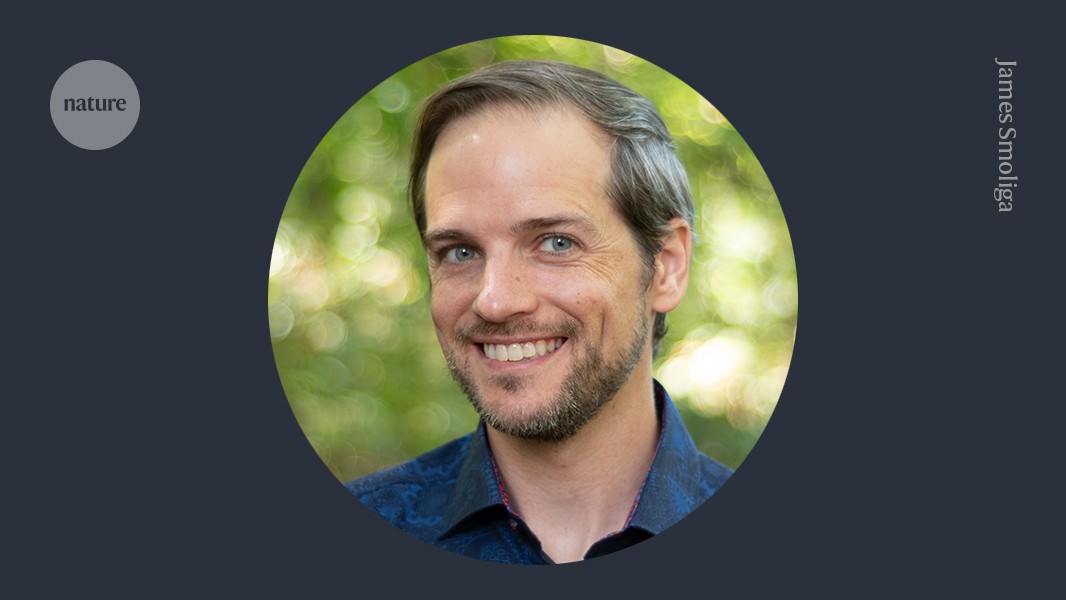
One morning in 2014, a colleague asked whether I'd seen a new study linking concussion risk to altitude exposure. The work was part of a package of evidence promoting a device to prevent concussion in contact sports. I'm not a concussion researcher, but having trained in sports medicine, I felt that the scientific claims being put forward to justify using this device were implausible.
Colleagues agreed with my opinions, but were too busy with their duties to challenge the claims. So, I stepped away from my own research to do so. I collaborated with The New York Times on an investigation, and published papers showing that some of the work cannot be replicated.
Since then, I've responded to other issues that I view as being of urgent public interest -- ranging from rapidly producing mpox guidance for athletes during a disease outbreak, to promptly writing a detailed analysis countering claims that the collapse, in 2023, of the American-football player Damar Hamlin was related to the COVID-19 vaccine.
I think it's crucial that more academics get the chance to take this path, free from a rigid research agenda.
Robust scientific progress requires not only original research, but also rigorous validation of findings, their adoption across disciplines and effective communication. Yet the dominant model of academic science is to secure grant funding, generate results and then get more funding. With promotions and career progression depending on this cycle, it can be hard to justify spending time on extracurricular projects. Instead of expecting agenda-focused laboratory heads to take on these tasks as side projects, as is often the case, universities should employ people who have complete scholarly autonomy to specialize in them.
I'm fortunate that my department has an educational track that supports scholarship outside of conventional research agendas. My position provides dedicated time for scholarly work and the flexibility to pursue interdisciplinary questions as and when needed. Grants are treated as a tool to support projects when required, rather than as the hallmark of success. I can choose which issues to pursue -- or stop pursuing -- at will. Peer-reviewed publications are central, but the scholarly value of rigorous work disseminated through public communication and research-integrity efforts is also recognized.
I suspect that few other researchers have the same latitude. Yet research institutions would benefit from employing agenda-free scholars. These people are well placed to connect and integrate findings across disciplines, populations and methodologies, revealing connections, contradictions and redundancies between fields and thereby increasing research efficiency -- work that is often undervalued in decisions about tenure and promotion. Some might think that principal investigators, as experts in their fields, are better placed to synthesize and contextualize research. But expecting one person to manage many responsibilities risks diluting their effectiveness in each.
Collaboration with agenda-free scholars could also enhance the quality and impact of other researchers' work. One survey (K. D. Cobey et al. PLoS Biol. 22, e3002870; 2024) found that researchers wish they had more time to examine the raw data generated in their lab -- the lack of scrutiny can compromise research integrity if errors go unnoticed. Agenda-free scholars with expertise in data validation can help to fill this gap as part of their workload.
To create change, institutions should first reframe expectations for teaching-focused faculty members, encouraging research synthesis, along with 'watchdog' and analytical roles. If these programmes result in impactful publications, meaningful public engagement or improved research efficiency, funding for dedicated agenda-free scholars could be considered.
Institutional seed grants, which are typically used for early-stage studies, could be partially repurposed to support one-off projects. And funding agencies could adopt rapid-response or rolling mini grants for urgent projects, funding scholars on the basis of their overall capability -- as judged by their publication history and ability to demonstrate relevant technical expertise and methodological rigour, say -- rather than having a research background (or the intention to work) in the specific area being funded.
These jobs should not be considered fallback options, but be recognized as valuable career pathways by graduate advisers, hiring committees, administrators, professional societies and funding agencies. And doctoral students should be encouraged to consider these careers.
Institutes will need fresh evaluation criteria for agenda-free scholars. Some existing metrics could be easily adapted -- for example, synthesis and review papers could be valued as equivalent to original research articles. In addition, scholars might be asked to demonstrate that their work has prevented the spread of flawed findings, or prompted corrections or retractions, or redirected research efforts towards more-valid lines of inquiry.
Creating roles for agenda-free scholarship will help talented scientists to fill crucial gaps in academia, retaining researchers who might otherwise seek jobs elsewhere. Embracing agenda-free scholarship is a smart, efficient allocation of limited resources -- crucial at a time when scientific trust is fragile and budgets are constrained.
Your email address will not be published. Required fields are marked *




No comments yet. Be the first to comment!